
These butterfly coloring pages feature 2 cheerful designs with different springtime stories: a garden tea party and a flight through rain. One butterfly spreads its patterned wings while perched on a flower-shaped teacup, while the other flies above a puddle holding a large leaf. Both scenes include smiling characters and familiar objects that children can color separately or connect through an imagined adventure.
Butterfly Tea Party Garden pairs decorative wing patterns with a teapot, strawberries, hearts, and three daisies. The butterfly is the central character, but the surrounding details give children plenty of choices about where to begin. They might decorate the teacup first, give each flower a different center, or repeat a favorite color across the wings and tea-party accessories.
Butterfly Flying Through Spring Rain offers a different setting, with rain boots, a paper boat, and a closed umbrella below the flying butterfly. The leaf and puddle invite combinations of leafy greens and watery blues, although unexpected colors work just as well. Children can imagine whether the butterfly is sheltering beneath its leaf, watching the boat, or heading toward a garden after the shower.
Choose a sheet by the details your child wants to color rather than by a strict age label. The garden scene offers small decorative areas, while the rainy scene includes distinct objects that can become individual coloring goals. These butterfly coloring sheets can accompany a spring activity at home or a classroom art session, with crayons for broad areas and sharpened pencils for patterns. Finished together, the pictures also offer a starting point for comparing a garden gathering with a rainy-day adventure.
Printing Your Butterfly Coloring Pages on Letter or A4 Paper
Open the chosen design using its PRINT button and check the print preview before sending it to your printer. The supplied print files are images. Select US Letter or A4 to match the paper loaded in your tray, use portrait orientation, and choose Fit to Page or a similar setting that keeps the complete picture inside the printable margins.
Plain white printer paper works well for crayons and colored pencils. For markers, use heavier paper your printer supports and place a spare sheet underneath while coloring to catch ink that passes through. Select black-and-white or grayscale printing, then inspect one test copy for clear outlines before printing several. If anything looks cropped, reduce the scale slightly in the preview.
Choose from 2 Butterfly Coloring Pages with Spring Scenes
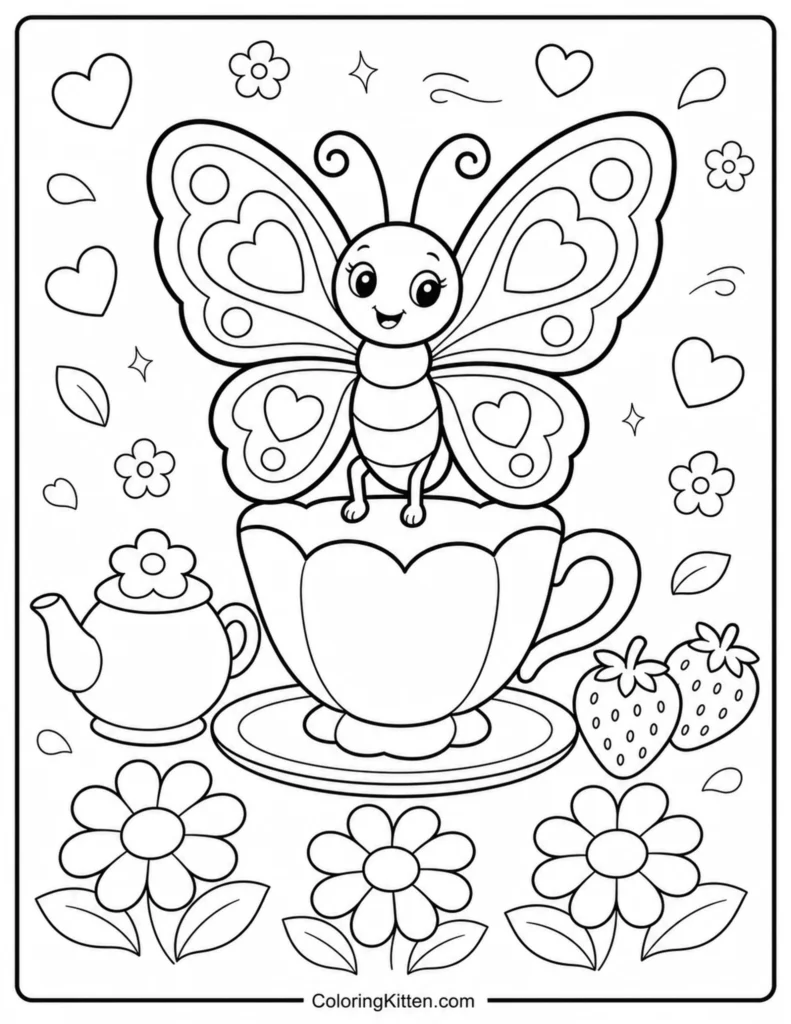
1. Butterfly Tea Party Garden
A smiling butterfly spreads its patterned wings while perched on a flower-shaped teacup beside a teapot, strawberries, and three daisies. Children may enjoy this cheerful garden tea-party scene for springtime activities, quiet afternoons, or butterfly-themed fun.

2. Butterfly Flying Through Spring Rain
A smiling butterfly flies above a puddle while holding a large leaf, with rain boots, a paper boat, and a closed umbrella below. Children may enjoy this cheerful rainy-day scene during spring activities or quiet indoor coloring time.
Discover the Tea-Party Details and Rainy-Day Objects
In the tea-party picture, start by finding the butterfly's patterned wings and the flower-shaped cup supporting it. Then look for the teapot, strawberries, hearts, and three daisies. Children can choose a small palette and repeat it across related details, such as using the same pink for the hearts and parts of the teacup.
In the rain picture, follow the scene from the butterfly and its large leaf down to the puddle, boots, paper boat, and closed umbrella. Try a pale blue puddle with darker color near its edges, or decorate the boots with an invented pattern. Ask children which object they would use on a wet day and which detail makes the picture feel most playful.
Before coloring, invite children to point out something the scenes share and something that differs. Both butterflies are smiling, but one is perched on a cup while the other is flying. Comparing those poses can help children decide whether their picture tells a story about resting, celebrating, traveling, or exploring.
Match the Coloring Session to Your Child's Interests
For a child who prefers larger coloring areas, suggest completing the main butterfly or one recognizable object first. A short session can focus on the leaf and boots or the teacup and flowers without requiring every detail to be finished. Children comfortable with smaller spaces may enjoy the wing patterns or careful changes of color between neighboring shapes.
At home, let your child choose a scene and explain what attracted them to it before selecting colors. In a classroom, offer both pictures and invite children to describe the setting suggested by their chosen sheet. For shared coloring, agree on which areas each person will complete and pass the page between turns.
These are playful character scenes, so children do not need to match a particular butterfly species or use realistic colors. An orange leaf or purple strawberries can belong to an imagined story. If using the pictures alongside a nature lesson, distinguish the fantasy elements, such as a butterfly holding a leaf or attending a tea party, from observations of real insects.
Turn Finished Pictures Into Spring Stories and Keepsakes
Place the completed pictures side by side and ask what might happen between the scenes. Perhaps the butterfly leaves the tea party when rain begins, or the rainy flight comes first and the garden gathering follows. Have children dictate or write a short caption for each picture, using visible objects such as the paper boat or teapot to anchor their story.
Mount a finished sheet on colored paper and add a handwritten title beneath it for a simple display. Alternatively, use both pictures as the opening pages of a spring story booklet and add a blank page for a child-drawn ending. A trimmed portion of the artwork can also decorate the front of a handmade greeting card.
Let marker ink dry before folding or mounting the artwork, and have an adult help with scissors when needed. Keep a photo of the finished picture if the original will become a card or craft. Returning to these butterfly coloring pages with a different palette can give children another way to tell the same springtime stories.
Butterfly Coloring Questions and Practical Tips
Can I print these butterfly pictures on A4 paper?
Yes. Select A4 in your printer settings and use portrait orientation with Fit to Page. Check that the complete outline appears inside the margins. For US Letter paper, select Letter instead and review the preview again, since the two paper sizes have different proportions. The supplied print links lead to image files.
Which scene should a beginner try first?
Choose based on the objects your child finds easiest to recognize and color. The rain scene offers separate goals such as the boots or leaf, while the garden picture includes decorative wing patterns. A beginner can color selected areas and leave smaller details for another session, without needing to complete the whole sheet.
What colors work well for the butterfly wings?
Try two or three favorite colors and repeat them across the wing patterns where desired. Bright wings can stand out against a softly colored puddle or tea-party accessories. Children can also invent their own combinations; these smiling butterfly characters do not require a species-specific palette. Test a color on spare paper before filling a small area.
How can I use the pictures for a classroom activity?
Invite children to choose a scene, color it, and describe one visible detail to a partner. Follow with a short writing activity about the tea party or rainy flight. Comparing the two settings gives the group a shared discussion without requiring identical artwork. Children who prefer speaking can dictate a caption instead of writing one.
What can we do with the pages after coloring?
Display them together, add captions, or use them in a simple spring story booklet. A trimmed picture can decorate a handmade card with adult help for cutting. Photographing the artwork preserves a copy before crafting. Let children choose whether to keep their butterfly coloring pages whole or turn them into another project.