
Explore mosasaurus coloring pages with friendly marine reptiles, underwater discoveries, and a lively lighthouse scene. This collection includes 4 designs that move from a bubble-filled reef to sunken ruins, a giant pearl discovery, and rolling ocean waves. Each picture offers a different starting point for coloring: choose an underwater treasure hunt, focus on an unusual object, or give the seaside scene a dramatic sky.
Mosasaurus Bubble Reef Adventure shows a cheerful young Mosasaurus swimming above a treasure chest among seashells, starfish, coral, seaweed, bubbles, and tiny fish. Mosasaurus Through the Sunken Arch takes the adventure into underwater ruins, where a smiling swimmer passes through cracked stonework above a spiral shell, broken pot, anchor, rocks, and sea grass. These scenes invite children to pick out smaller objects around the central character.
Baby Mosasaurus Finds a Giant Pearl centers on an open clam and its oversized pearl, with fossils, shells, a bucket, and a magnifying glass scattered nearby. For a change of setting, Mosasaurus Leaping by the Lighthouse places the creature above waves beside a floating log and rounded rocks. Seabirds, clouds, stars, crescent moons, and a distant lighthouse give children plenty of choices beyond coloring the animal itself.
Start with whichever scene catches your child's attention, then decide how much detail to tackle in one sitting. A child can color the Mosasaurus first and return to the surrounding objects later, while someone who enjoys smaller details can work through shells, coral, or stone cracks. These playful illustrations welcome imaginative colors and invented adventure stories, whether children color independently or share their discoveries with an adult.
Printing Your Mosasaurus Coloring Sheets on Letter or A4
Open the selected design using its PRINT button, then check the print preview. Choose US Letter or A4 to match the paper loaded in the tray, and use portrait orientation. Select Fit to page or a similar scaling option so the outer edges stay inside the printable area. If the preview includes a browser header or web address, turn those options off.
Plain printer paper works well for crayons and colored pencils. For markers, choose thicker paper that your printer supports and place a spare sheet underneath while coloring to catch bleed-through. Use a black-and-white or grayscale setting and check that the outlines appear clear. Print one test sheet before making multiple copies, since margins and scaling can vary between printers. The linked files are PNG images, so use the image or browser printing controls.
Explore 4 mosasaurus coloring pages
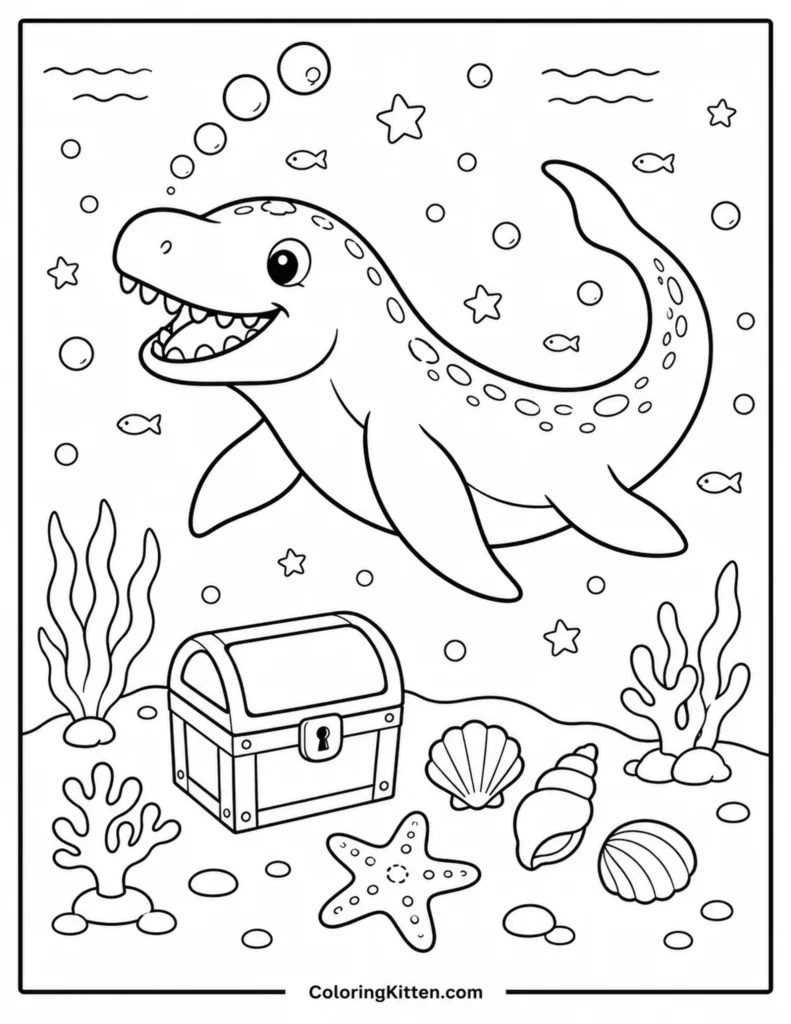
1. Mosasaurus Bubble Reef Adventure
A cheerful young Mosasaurus swims above a treasure chest, seashells, starfish, coral, seaweed, bubbles, and tiny fish. Children may enjoy this playful underwater scene during dinosaur activities, ocean lessons, quiet afternoons, or imaginative treasure-hunting fun.

2. Mosasaurus Through the Sunken Arch
A smiling Mosasaurus swims through a cracked stone arch above a spiral shell, broken pot, anchor, rocks, sea grass, bubbles, and small fish. Children may enjoy coloring this playful underwater ruins scene during dinosaur, ocean, or adventure activities.

3. Baby Mosasaurus Finds a Giant Pearl
A cheerful baby Mosasaurus hovers beside an open clam holding a huge pearl, with fossils, shells, a bucket, and a magnifying glass scattered across the seabed. Children may enjoy this playful underwater discovery and fossil-hunting theme.

4. Mosasaurus Leaping by the Lighthouse
A cheerful Mosasaurus leaps from rolling ocean waves near a floating log, rounded rocks, seabirds, clouds, stars, crescent moons, and a distant lighthouse. Children may enjoy this lively seaside scene during an ocean, dinosaur, or nighttime-themed activity.
Find Reef Treasures, Sunken Ruins, and Seaside Details
The surrounding objects give each underwater picture its own focus. In the reef adventure, children can find coral, seaweed, tiny fish, and starfish around the treasure chest. Try warm browns or golden yellows on the chest against cooler water colors to make the discovery stand out. Give nearby shells different shades so their shapes remain easy to distinguish.
The sunken arch scene offers textures to explore. Add uneven gray or sandy patches to the cracked stones, then choose a contrasting color for the Mosasaurus swimming through them. The broken pot, spiral shell, and anchor can each receive a distinct shade. Children who prefer a simpler approach can color those objects with one color apiece.
Compare the pearl discovery with the lighthouse picture to notice how the setting changes. One draws attention toward an open clam on the seabed, while the other shows a leap above rolling waves. Invite children to locate the bucket and magnifying glass in the discovery scene, then find the seabirds and distant lighthouse in the seaside picture.
Choose a Coloring Approach That Fits Your Child
Choose by comfort with detail rather than a fixed age label. A child who prefers larger areas can begin with the central creature and leave tiny fish, shells, or bubbles for another session. Someone who likes careful work may enjoy following the arch's cracks or coloring the small sky details. Preview the pictures together before choosing supplies.
For a short home activity, choose colors for the Mosasaurus, water, and one favorite object first. For a classroom or shared table activity, invite each child to select a scene and explain what caught their attention. An ocean-themed session can begin with finding the illustrated fish, shells, seaweed, and waves before anyone starts coloring.
Colored pencils allow controlled marks around small objects, while crayons suit broader areas and a looser style. Encourage children to turn the paper when an angle feels awkward and pause when they want a break. A background can remain white, and a partly colored page can be revisited later. Let the child's interest guide how much gets finished.
Make Ocean Stories and Displays After Coloring
Add a short caption beneath a finished picture or write it on a separate strip of paper. The reef scene might inspire a story about what is inside the chest, while the pearl page can begin when the baby Mosasaurus notices the open clam. Ask the child to name the character and describe what happens next.
Mount a finished sheet on blue paper and give the adventure a title. For a shared display, arrange the scenes into a story sequence and let children decide how the reef, ruins, pearl, and lighthouse connect. A separate discovery guide can include drawings or handwritten names of favorite objects spotted in the pictures.
Color another copy with a different palette and compare how the mood changes. Pale turquoise water, a deep purple sea, or a white background can each give the same illustration a different feel. Keep favorite mosasaurus coloring pages together as an adventure booklet, with dictated or handwritten captions explaining each discovery.
Mosasaurus Coloring Questions and Practical Tips
Can I print these pages without downloading a PDF?
Yes. The PRINT links point to PNG images. Open your chosen image and use the browser's print command. Select Letter or A4, check portrait orientation, and use Fit to page if the preview cuts off an edge. A PDF file is not listed for this collection.
Which picture should a beginner choose?
Start with the scene the child likes most and color its central Mosasaurus first. Each setting includes smaller details that can wait until later. Compare the previews together and choose comfortable coloring areas instead of expecting a beginner to finish every shell, fish, or sky detail.
How can children color the giant pearl?
Leave much of the pearl white and add a pale pink, lavender, or gray edge to suggest its rounded shape. Choose a stronger color for the clam to separate the two. A light touch with colored pencils makes it easier to build shading gradually without covering the white center.
How can I use the sunken arch scene with a class?
Ask children to locate the spiral shell, broken pot, anchor, and cracked arch before coloring. Then invite them to imagine how the objects arrived underwater. Each child can share a sentence aloud or dictate a caption, combining individual coloring with a brief group storytelling activity.
Can the lighthouse picture become a nighttime scene?
Yes. Its stars and crescent moons offer a starting point for a nighttime palette. Try dark blue in the sky and lighter shades on the waves and Mosasaurus. Use a contrasting color to keep the distant lighthouse visible, then write a caption about the creature's nighttime leap.