
These nature mandala coloring pages bring leaves, shells, weather, and growing plants into rounded arrangements with repeating shapes. The collection includes 15 designs, ranging from an oak leaf circle with acorns to a sprouting seed with leaves above the soil and roots below. Children can choose a familiar outdoor subject or try a landscape they would like to explore. You can compare this collection with related pages in the Nature Mandalas hub.
Some sheets focus on a central object surrounded by smaller natural details. A spiral seashell sits among scallop shells, curling waves, and pearls, while a spotted woodland mushroom stands in grass beneath a leafy halo. Others build their pattern from repeated objects, including river pebbles arranged around a central stone and fern fronds curving into a leafy pinwheel. These differences give children several ways to approach a page without needing a complicated color plan. For additional related themes, explore the broader Mandala Coloring Pages category.
The scenes also offer choices throughout the year. The butterfly among flowers and the water lily with lily pads suit spring or garden activities, while the apple tree and pinecone connect with orchard and woodland themes. A six-armed snow crystal provides a winter option. For children drawn to skies and landscapes, there is a rainbow above a rain cloud, a crescent moon beside a star, and a snowcapped mountain before a round sun. Visit Free Coloring Pages when you want to browse the complete printable library.
Use the coloring sheets for a quiet afternoon, a nature table, or a classroom activity alongside a book or outdoor observation. Start by letting each child choose a subject that interests them. They might color every repeated shape alike, alternate two colors around the center, or give each section its own combination. The flowering cactus, pond scene, and leafy patterns can all support different choices without requiring children to copy an example.
How to Print These Nature Coloring Sheets on Letter or A4 Paper
Choose US Letter or A4 in your printer settings to match the paper loaded in the tray. Check the print preview before printing, then select Fit to page or a similar option if the border or bottom text extends beyond the printable area. Avoid Fill page when it enlarges the image enough to crop the edges. Print one test sheet before preparing a group set.
Plain white printer paper works well for crayons and colored pencils. For markers, choose heavier paper that your printer supports and place scrap paper underneath while coloring to protect the table from ink. Select black-and-white or grayscale printing and use standard or high quality for clear outlines. Print single-sided if children will cut out their finished designs or use materials that may show through the paper.
Explore 15 nature mandala coloring pages

1. Oak Leaf Mandala With Three Acorns
Six oak leaves radiate from a large circular center, accompanied by three acorns, four rounded pebbles, and two small circles. Children can enjoy this autumn nature activity after gathering fallen leaves on a woodland walk.

2. Snowcapped Mountain With Sunrise Mandala
A snowcapped mountain rises before a round sun inside a circular sunray mandala, with two clouds above and three stones below. Children can enjoy a peaceful nature activity while imagining a morning in the mountains.

3. Spiral Seashell With Scallops and Pearls
A large spiral seashell faces toward the lower right, surrounded by five scallop shells, two curling waves, and three pearls below. Children who enjoy beach treasures can explore an ocean theme during a quiet coloring activity.
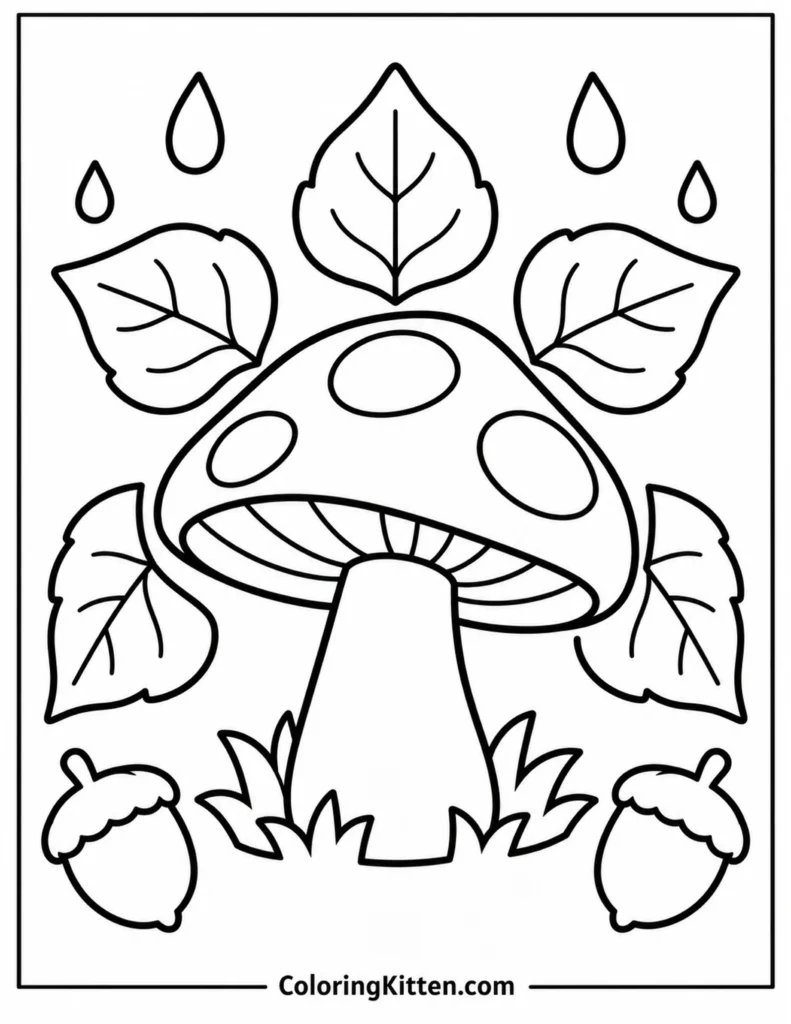
4. Spotted Woodland Mushroom With Leaves and Acorns
A large mushroom with three spots stands among tufts of grass beneath a leafy halo with two acorns below and four raindrops above. Children can enjoy this woodland scene during a quiet autumn coloring activity.

5. River Pebble Mandala With Leaves
Eight rounded pebbles surround a larger central stone, with crescent ripples around the arrangement, two leaves above, and three water droplets below. Children can enjoy a quiet nature activity while coloring the repeating pebble pattern.

6. Pinecone Surrounded by Evergreen Trees
A large upright pinecone sits between four evergreen trees with two oval seeds below and four circles near the upper sides. Children can enjoy this woodland scene during a quiet nature activity or after collecting pinecones outdoors.

7. Rain Cloud Mandala Beneath a Rainbow
A puffy rain cloud sits beneath a wide rainbow with large droplets arranged around it and four smaller clouds nearby. Children can enjoy this weather theme during a rainy afternoon or while learning about clouds and rain.

8. Water Lily With Lily Pads and Bubbles
A five-petaled water lily sits among four notched lily pads with two curved ripples above and three bubbles below. Children can enjoy this gentle pond scene during a quiet nature-themed coloring activity.
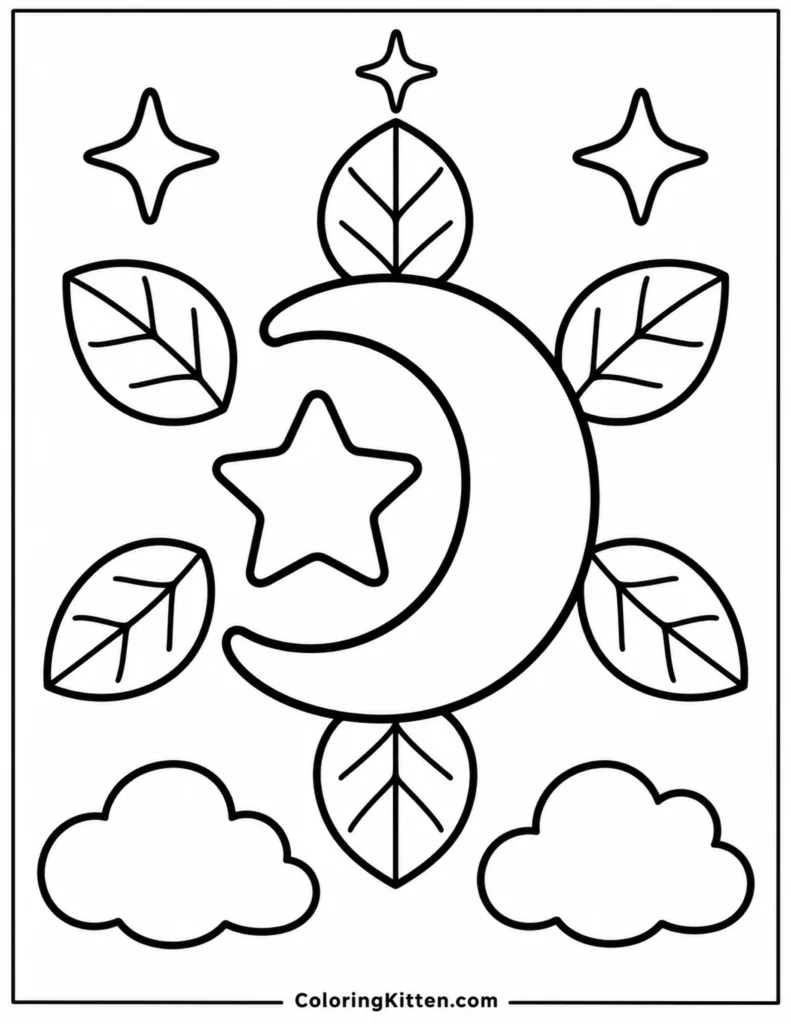
9. Crescent Moon and Star Leaf Mandala
A broad crescent moon curves around a large star with six leaves surrounding it and two clouds beneath three smaller stars. This gentle nighttime design offers a calming coloring activity to pair with a bedtime story.

10. Apple Tree With Leaves and Blossoms
A round apple tree holds three apples beneath three blossoms with four large leaves around it and two fallen apples beside its trunk. Children can enjoy this orchard scene during an apple harvest activity or a lesson about fruit trees.

11. Snow Crystal Above Snow Mounds
A large six-armed snow crystal with diamond tips is surrounded by oval ice shapes and circles above two snow mounds. Children can enjoy exploring its repeating shapes during a cozy winter coloring activity.

12. Butterfly With Spread Wings Among Flowers
A large butterfly spreads its four teardrop-patterned wings among four flowers with two leaves below and three circles above. This gentle meadow scene offers a cheerful spring coloring activity for children who enjoy butterflies and garden flowers.
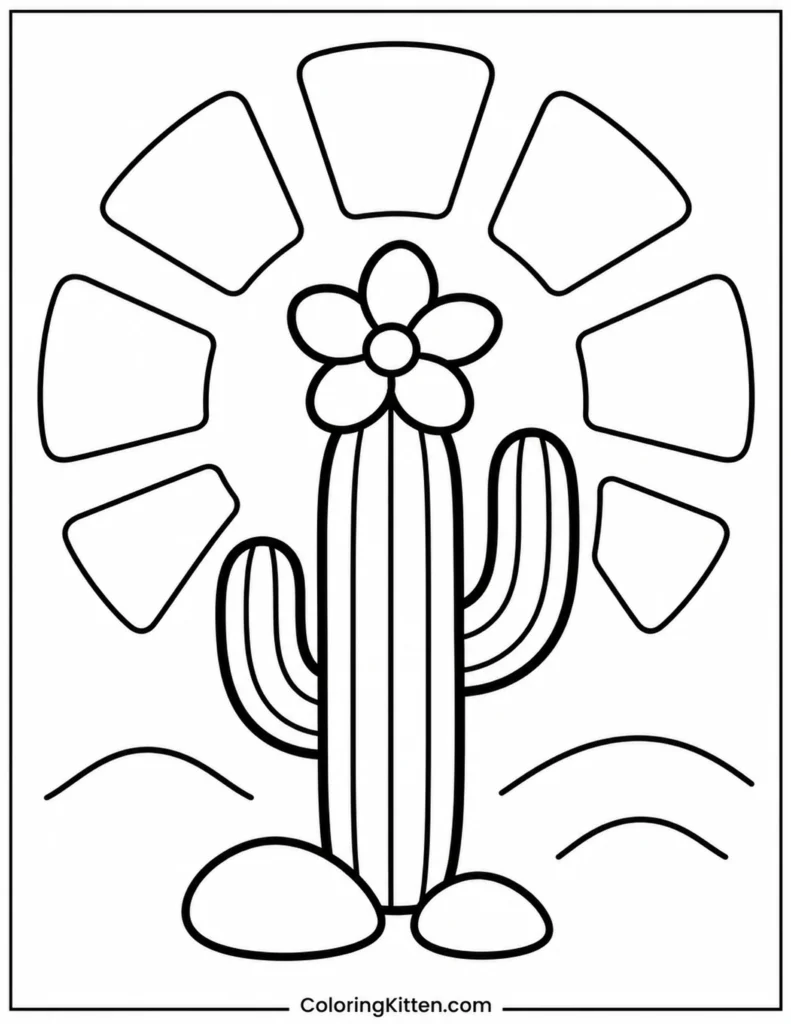
13. Flowering Cactus With Sun Rays
A tall cactus with two raised arms and a large flower stands among rocks and curved sand dunes beneath a fan of sun rays. Children can enjoy exploring desert plants during a nature-themed coloring afternoon.

14. Fern Fronds Form a Leafy Pinwheel
Four curved fern fronds circle an open center with oval seeds around them and three droplets above plus two curled shoots below. Children can enjoy the repeating leaf shapes during a quiet nature-themed coloring activity.

15. Sprouting Seed in a Garden Mandala
A split seed sprouts two broad leaves and a long branching root inside a circular garden mandala with flowers, a sun, water droplets, and pebbles. Children can enjoy this spring activity while learning how plants grow above and below the soil.
Look for Patterns Across Woodland, Water, and Sky
The woodland pages make a useful starting point for looking closely. Children can compare the broad oak leaves with the smaller leaflets on the fern fronds, then notice how each arrangement circles a center. The upright pinecone surrounded by evergreen trees offers another way to connect a central subject with its surroundings.
- Follow the water theme through the spiral seashell, river pebbles, rain cloud, and water lily pages. Look for waves, ripples, droplets, and bubbles.
- Compare the round sun behind the mountain with the rays above the flowering cactus. Try warm colors for the sky details and different shades for the land.
- Count the snow crystal's six arms, the butterfly's four spread wings, or the apples on the tree before choosing colors.
Some designs repeat their main shapes evenly, while others place a scene inside a loose circular frame. Invite children to spot the difference. They can trace the arrangement with a finger before coloring and decide which shapes belong to the repeating pattern.
Choose a Page and Activity to Match the Child
Choose by the amount of detail a child wants to color rather than setting a strict age limit. The large cloud, broad crescent moon, and rounded pebbles offer clear starting areas. Fern leaflets, pinecone sections, and the butterfly's wing panels provide smaller spaces for children who enjoy working more carefully.
Keep the first color plan manageable
Offer two or three crayons first and let children add more if they want. Alternating colors around the oak leaves or pebbles creates a visible pattern with little preparation. Children who prefer more detail can use light and dark versions of one color or plan matching sections on opposite sides.
At home, pair the sprouting seed with a seed-growing activity or the moon page with an evening story. In class, offer several subjects within one nature theme so children can make individual choices. Leave time for them to describe something they noticed, such as roots below the soil or notches in the lily pads.
Turn Finished Pages Into a Nature Display
Finished sheets can become a changing nature wall. Group the mushroom, oak leaf, and pinecone designs together, or arrange the cloud, mountain, and moon pages as a sky display. Keep the full sheets intact when possible so the surrounding details remain part of each picture.
- Make a personal nature booklet by placing finished pages in a folder and adding a handwritten cover.
- Ask children to write or dictate one observation beneath their picture on a separate strip of paper.
- Create a color comparison display by placing two versions of the same design together, such as a realistic green fern beside a multicolored fern.
- Use a finished circular design as the center of a larger paper collage. Add drawn leaves, weather symbols, or a short nature poem around it.
For cutting activities, provide child-appropriate scissors and supervision suited to the child. A simple cut around the whole arrangement is often easier than trimming every leaf or droplet. Keep a few nature mandala coloring pages available for another day so children can revisit a favorite subject with a new palette.
Questions and Practical Tips for Coloring Nature Mandalas
Why is the edge of my coloring page being cut off?
The image may extend beyond your printer's printable margins. Match the paper setting to US Letter or A4, then choose Fit to page and check the preview. If the border still looks cropped, reduce the print scale slightly and test one sheet.
Which designs are good starting points for younger children?
Try the rounded river pebbles, puffy rain cloud, or broad crescent moon. Let the child begin with the largest spaces and leave smaller details unfinished if they prefer. Thick crayons may be easier for large areas, while pencils suit smaller sections.
Do the plants and landscapes need realistic colors?
No. Children can use observed colors or invent their own palette. For a nature-study activity, compare the apple tree, fern, or cactus with a reference picture. For pattern play, try alternating colors or repeating one color across matching shapes.
How can I use these sheets with a mixed-age group?
Offer a choice of pages and one shared invitation, such as finding repeated shapes. Younger children can color a central subject, while others complete surrounding details or plan a repeating palette. This lets everyone work within the same theme at their own pace.
What can children do with a page after coloring it?
Add it to a nature folder, display it beside a related book, or mount it on larger paper with a short caption. Children can also revisit the same design later and compare their color choices, especially after a woodland walk or garden visit.